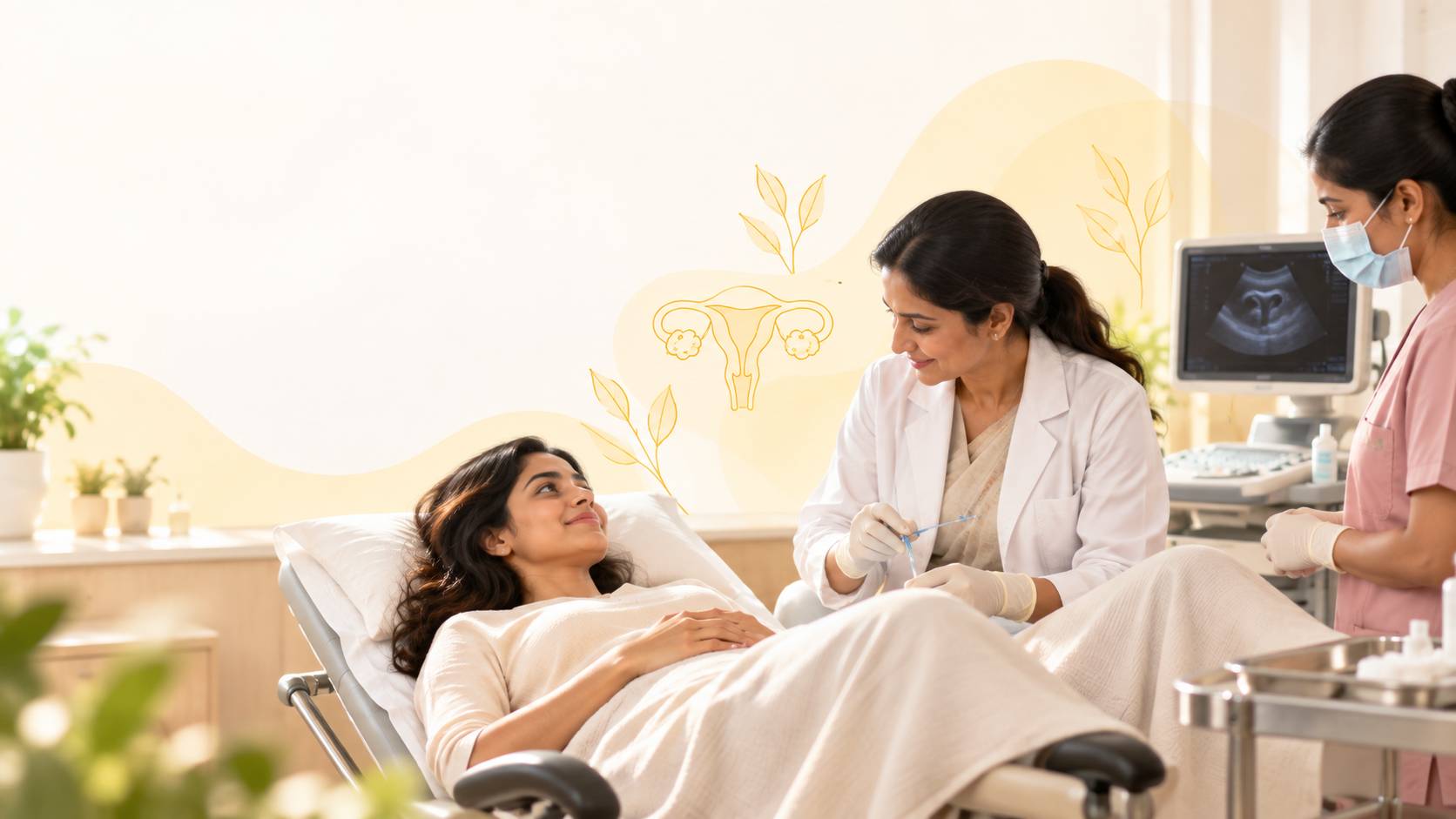
Ovulation disorders occur when an egg is not released regularly or ovulation does not occur. They are a common cause of female infertility and may be linked to hormonal, metabolic or reproductive factors.
What can affect ovulation?
Several factors can interfere with the normal ovulation process.
PMOS
Thyroid disorders
High prolactin levels
Significant weight changes
Excessive exercise or low energy intake
Reduced ovarian function
Signs of an ovulation disorder
Irregular menstrual cycles are often an important sign.
Irregular periods
Very long cycles
Very short cycles
Missed periods
Unpredictable periods
Difficulty conceiving
How are ovulation disorders diagnosed?
Evaluation helps determine whether ovulation is occurring and identify possible causes.
1. Menstrual History
We assess cycle length, frequency and changes over time.
2. Hormonal Testing
Blood tests may evaluate reproductive and thyroid hormones.
3. Ultrasound Scan
Ultrasound may monitor follicle development and ovulation.
4. Ovulation Monitoring
Cycle tracking helps determine whether and when ovulation occurs.
Treatment Options for Ovulation Disorders
Treatment depends on the underlying cause and fertility goals.
Lifestyle & Medical Management
Addressing contributing health factors may help restore regular ovulation.
Ovulation Induction
Medication may stimulate the development and release of an egg.
IUI
IUI may be considered when ovulation treatment alone is not sufficient.
IVF
IVF may be recommended when other treatments have not worked or additional factors are present.
Hormonal Treatment
Specific hormonal conditions may require targeted treatment.
Frequently Aksed Questions?
1. Can irregular periods mean I am not ovulating?
Irregular periods may indicate irregular ovulation, but evaluation is needed to confirm it.
2. Can ovulation disorders be treated?
Many ovulation disorders can be managed with appropriate treatment.
3. Can I get pregnant without regular ovulation?
Pregnancy may be difficult without regular ovulation, but treatment can help in many cases.
4. How is ovulation monitored?
Your doctor may use ultrasound, hormone tests and cycle tracking.
5. Is IVF necessary for an ovulation disorder?
Not always. Less complex treatments may be tried first.
6. Does age affect ovulation?
Ovarian function and fertility generally decline with age, making evaluation increasingly important.
Understand what may be affecting ovulation
Get the right evaluation and treatment plan for your fertility goals
About the Doctor
Dr. Lakshmi Krishnaleela understands that the road to fertility can be overwhelming. With over 23 years of specialized experience, she blends her high-level international training with a supportive, patient-first approach. From minimally invasive surgery to reproductive endocrinology, Dr. Lakshmi’s practice is built on the belief that everyone deserves a compassionate, science-backed path to building their family.
Educational Qualifications
MBBS
MD – Obstetrics & Gynaecology
MRCOG (UK)
Fellowship in Reproductive Medicine
Advanced Training in Infertility (USA)
Experience
27 years in women’s health and reproductive medicine
18+ years of specialization in infertility management and advanced ART procedures
Expert in ovulation induction, IUI, IVF, and recurrent pregnancy loss evaluations
Patient-first approach with a strong focus on success and emotional support
Treatments & Services
Advanced Treatments: IUI, IVF & ICSI supported by cutting-edge laboratories
IVF Enhancements: Assisted Laser Hatching and time-lapse embryo monitoring
Genetic Screening: PGS, PGD, DNA fragmentation index
Fertility Preservation: Egg, sperm, and embryo freezing with vitrification
Donor & Surrogacy: IVF with donor eggs, sperm, embryos; surrogacy
Expertise in Complex Cases: Management of poor responders, recurrent IVF failure, and challenging fertility conditions